Rhino Roofing & Restoration

Chimney Flashing Repair in Taylors, SC

Chimney flashing repair in Taylors, SC addresses the four-sided joint where masonry interrupts the roof. Rhino checks apron, step flashing, counterflashing, the upslope back pan, nearby shingles, and the chimney itself.

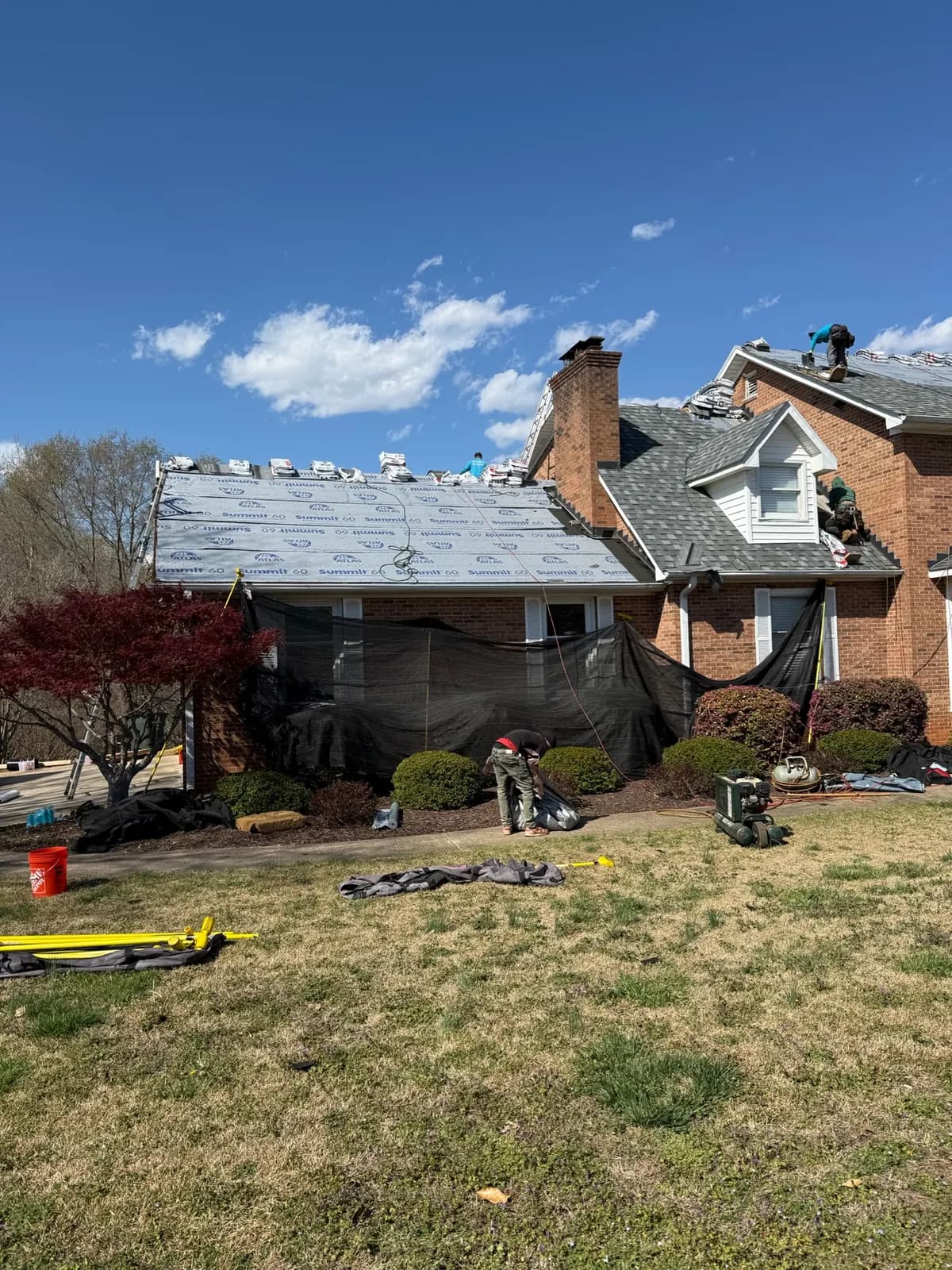
Roof replacement underway on a stone home

Why chimney leaks are rarely one simple joint

The downhill face needs an apron that sends water onto shingles. Both sides need step flashing woven through the courses. The uphill face must divide and discharge water that reaches the back of the chimney. Counterflashing protects upper metal edges where they meet masonry. A weakness on any face can feed the same interior stain.

Rhino has seen newer roofs leak because old chimney flashing was reused and covered with sealant. New shingles do not make an old masonry joint or undersized back pan work correctly. The inspection considers roofing, mortar, brick, cap, sidewall, cricket, and attic evidence before the repair boundary is set.

01Service guide

Parts of a chimney flashing system

Apron flashing crosses the lower face and extends onto the roof below. Its side corners must connect with the first step pieces without creating an open pinhole. Water leaving the chimney should stay on top of the shingles and continue toward the eave.

Step flashing uses separate pieces along each side, with one piece for each shingle course. Counterflashing is cut or secured into the masonry above and overlaps the steps. This arrangement lets roof and chimney move while keeping the upper flashing edge protected from rain.

The upslope side uses a back pan, saddle, or cricket arrangement based on chimney width, pitch, and water volume. A cricket can divide flow around a broad obstruction and reduce debris buildup. The detail still needs correct side laps and a clean route into the adjoining roof planes.

  • Apron

    The lower metal bridges the chimney face and finished roof without holding water at the corners.

  • Step pieces

    Individual side flashings overlap with shingle courses to create repeated downhill laps.

  • Counterflashing

    The upper masonry metal covers step edges and allows movement between roof and chimney.

  • Back pan or cricket

    The uphill detail redirects concentrated runoff around the obstruction.

02Service guide

Roof leak, masonry leak, or chimney-cap problem?

Cracked mortar, porous masonry, a damaged crown, missing cap, or an open flue detail can admit water above the roof line. That moisture may travel down the chimney and appear beside flashing even when the roof metal is intact. Wind direction and which side becomes wet can help separate the sources.

A roofing inspection reviews visible metal, laps, cuts, shingles, sealant, and deck clues. A masonry professional may need to evaluate brick, mortar, crown, or structural chimney conditions. Rhino states when the evidence crosses that trade boundary instead of promising roofing metal will correct every chimney opening.

Attic staining can follow framing beside the chimney. Old marks may stay visible after a repair, and condensation inside a flue or metal liner can create another moisture path. Current weather, dryness, cap condition, and interior use all add context before the roof is opened.

03Service guide

Why roofing cement is not a full chimney rebuild

Thick black cement or repeated caulk often signals a joint that has been patched from the surface. Sun and movement crack the coating, while water can enter behind its upper edge. Each added layer makes the original steps and counterflashing harder to see and clean.

A durable repair may require removing shingles around the chimney, taking out failed metal, cleaning the masonry joint, and installing new shaped pieces in sequence. Counterflashing should overlap the roof flashing while allowing the two structures to move independently.

Sealant can remain part of selected reglets, corners, fasteners, and storm details when compatible with the materials. Rhino uses it to complete a constructed lap, not to draw a surface border around the chimney and call the opening repaired.

04Service guide

Chimney flashing during roof replacement

Replacement is the best time to see the full lower flashing system because surrounding shingles are already removed. Rhino can identify old step pieces, fastener holes, undersized pans, deck damage, and abandoned patchwork before the new roof closes the area.

Reusing serviceable metal may be possible in limited conditions, but it should be a conscious decision. Bending old steps repeatedly can crack them, and new shingle thickness or exposure may not align with old pieces. A long-lived new roof should not inherit a weak chimney detail simply to save a small line item.

Rhino places ice-and-water membrane around chimneys during replacement work. The membrane adds protection at the deck, while metal flashing still handles the working water path. Neither component excuses poor corners, low back-pan height, or counterflashing left open at the masonry.

05Service guide

How much material a chimney repair may open

Step flashing is woven beneath multiple shingle courses, so access usually extends beyond the visible metal edge. Brittle shingles may crack when lifted, and a discontinued color may not match. The owner should know the likely repair footprint and appearance before work begins.

Damaged decking may appear after old flashing is removed. Local wood work can restore support beneath the new assembly. Deterioration that continues into wall framing, chimney support, or broad masonry may require a revised scope and another professional before roofing closes the joint.

Interior finish repair is separate from stopping exterior water. Wet insulation and stained drywall may need drying or replacement after the chimney is sealed. Rhino documents the roof work so the owner can connect it with any interior restoration without mixing trade responsibilities.

06Service guide

Chimney care after flashing repair

Keep leaves and needles from packing behind the uphill face. Water and debris need room to divide around the chimney. Tree work should be handled safely by a qualified professional, and homeowners should not climb onto the roof to sweep the back pan.

Masonry repairs, painting, siding changes, and chimney service should not bury or puncture counterflashing. Tell those contractors when the flashing was rebuilt and ask how their work will preserve the upper edge. A small fastener through the wrong metal can create a new leak path.

Save photographs of all four sides, the repair invoice, material notes, and any masonry work. Check the interior after wind-driven rain and note which chimney face received the weather. That record helps Rhino distinguish a returning roof joint from a cap, mortar, or flue concern above it.

07Service guide

Coordinating roofing and masonry schedules

Mortar repair, crown work, or brick replacement may need to happen before final counterflashing is cut into the chimney. In other cases, roofing access must open the joint first. Rhino and the masonry contractor should agree on sequence, temporary protection, reglet location, and which trade seals each upper edge.

Fresh masonry materials need suitable curing and weather conditions. The roof should not remain open while another trade waits without a plan. A written handoff identifies the temporary dry-in, return date, and finished responsibility so water does not enter through a gap between two otherwise correct scopes.

How we approach it

Inspect all four sides before rebuilding the joint

Chimney work follows water from cap and masonry to counterflashing, step pieces, back pan, apron, and the roof deck below.

  1. 01

    Separate likely sources

    Rain direction, interior evidence, chimney condition, old repairs, and each flashing face are reviewed.

  2. 02

    Open the roof connection

    Enough shingles and failed metal are removed to inspect hidden steps, deck, corners, and masonry joints.

  3. 03

    Layer and document

    Protective membrane and shaped flashing restore the downhill path, with all chimney faces photographed.

Helpful answers

Chimney Flashing Repair questions

Chimney leaks can come from roofing or masonry, and the repair should state which source the evidence supports.

Can Rhino fix a chimney leak with new flashing alone?

New flashing can correct a failed roof-to-chimney joint. Cracked masonry, a damaged crown, open cap, flue issue, or structural chimney problem may need a qualified chimney or masonry professional as well.

What is a chimney cricket?

A cricket is a small peaked structure on the upslope side that divides water around a wider chimney. Its need depends on chimney width, roof pitch, code, debris, and the existing drainage pattern.

Can old chimney flashing stay during roof replacement?

Only when its material, shape, condition, height, and alignment remain suitable for the new roof. Rhino reviews it while the courses are open and recommends replacement when reuse would leave a weak detail.

Why does my chimney flashing repair look newer than the roof?

New shingles, metal, mortar, and sealant have not weathered like surrounding materials. A technical repair may remain visible, especially when the old shingle color is discontinued. Rhino discusses expected appearance before work.

Ready when you are

Give every chimney face a working water path.

Call Rhino for chimney flashing repair in Taylors, SC and a clear review of the roof metal, masonry boundary, and hidden deck area.