
Rhino Roofing & Restoration

Roof Drainage Solutions in Taylors, SC

Roof drainage solutions in Taylors, SC begin with watching where rain is supposed to go and where it actually slows, spills, backs up, or reaches a wall. Rhino maps the path from upper roof to final outlet.

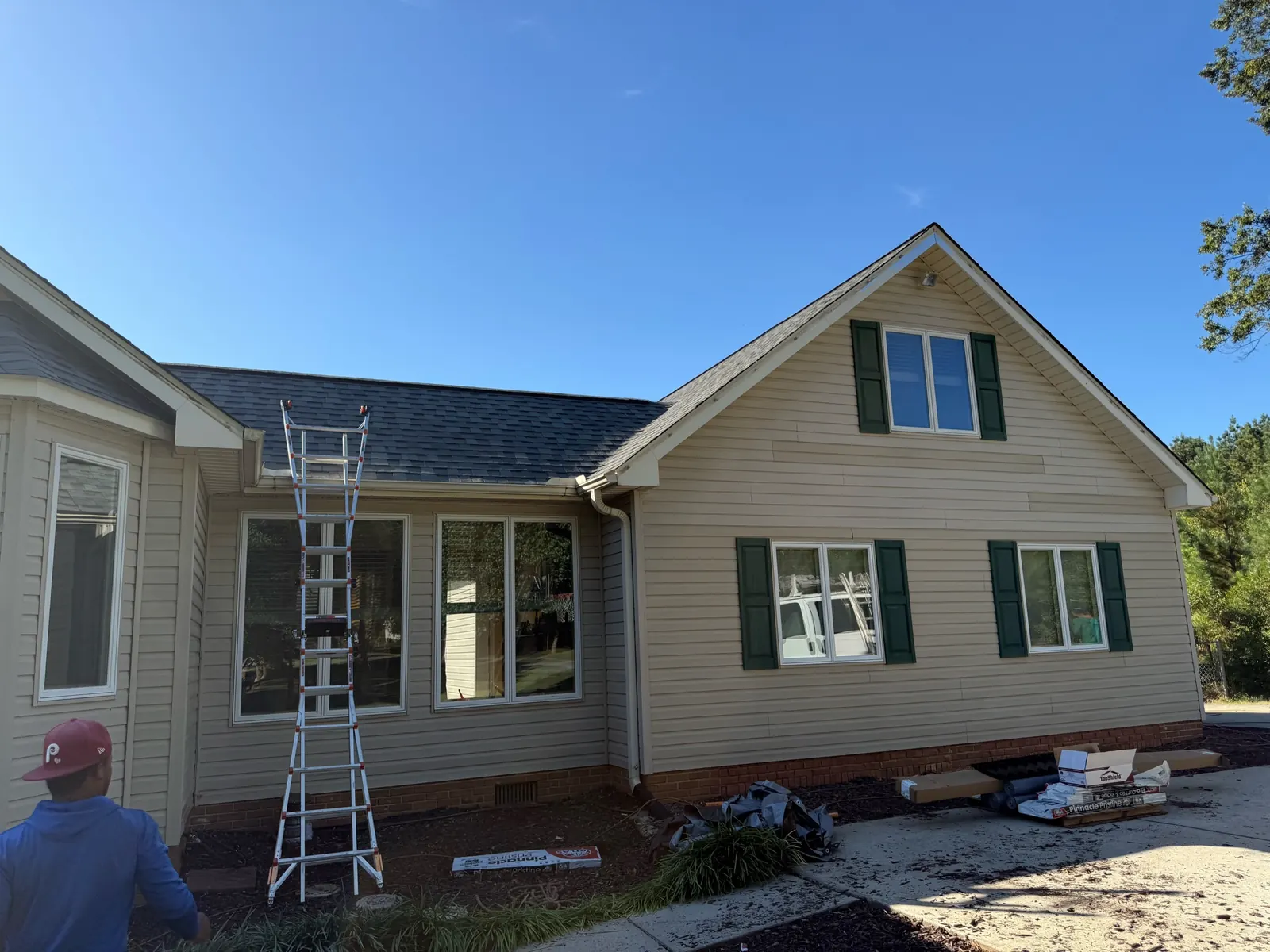
Completed roof replacement on a Taylors-area home
A finished residential roofing project in the Upstate.

Roof drainage is a path, not one product

Rain may cross upper shingles, collect in a valley, enter a gutter, move through a downspout, and discharge beside the foundation. On a low-slope roof, it may travel through tapered insulation to a drain or scupper. Trouble at any point can make a sound roof detail carry water it was not designed to receive.

Rhino evaluates the roof portion and explains when gutter, underground drain, grading, masonry, siding, plumbing, or structural work needs another specialist. This boundary keeps roofing proposals honest. Moving water off the membrane is only part of the job if the outlet sends it behind a wall or back toward the building.

01Service guide

Signs the roof is not draining as planned

Overflowing gutters, water streaks on fascia, washed mulch, dark wall staining, repeated valley debris, and drips behind siding can point to concentrated runoff. Inside, stains may appear at eaves, lower walls, roof-to-wall joints, or beneath low areas after long rain.

Low-slope roofs may show dirt rings, biological growth, compressed insulation, or water remaining days after a storm. One shallow area is different from deep ponding across a broad deck. The cause may involve blocked outlets, low structure, poor taper, added equipment, or material that has settled.

Erosion near a downspout does not prove the roof itself failed. Water may leave the roof correctly and become a site problem at grade. Rhino traces the sequence so the roofing scope addresses roof drainage while the owner coordinates foundation or landscape discharge when needed.

  • Steep roof

    Upper slopes, valleys, kick-outs, eaves, gutters, and lower roof sections control concentrated runoff.

  • Low-slope roof

    Deck slope, tapered insulation, crickets, drains, scuppers, and overflow routes move slow water.

  • Wall connection

    Flashing height, siding clearance, kick-outs, and gutters keep roof water outside the wall.

  • Ground discharge

    Downspouts and outlets need a route that does not return water to the building edge.

02Service guide

Valleys, crickets, and upper-roof discharge

Valleys combine water from two slopes. Their cut lines, lining, fasteners, deck plane, and lower outlet need room for heavy Upstate rain. A valley that empties behind a short gutter or against a wall remains vulnerable even after the upper lining is repaired.

Crickets divide water around wide chimneys, curbs, and rooftop equipment. Without one, debris and standing water can collect on the upslope side. The cricket needs suitable height, supported framing or tapered material, protective membrane, and side laps that rejoin the main flow below the obstruction.

An upper downspout that dumps onto a lower shingle roof can erode granules and overload one small area. Extending or redirecting the discharge may reduce wear, but attachment and appearance matter. The change should not create a trip point, block a valley, or force water beneath a course.

03Service guide

Gutters, kick-out flashing, and roof edges

Gutters need appropriate position, support, slope, outlet capacity, and open downspouts. A gutter mounted too low may miss fast valley runoff, while one set too high can interfere with the roof edge. Debris screens can reduce some material but still require inspection and cleaning.

Kick-out flashing sends water from a roof-to-wall joint into the gutter. When it is missing, runoff may pass behind siding and damage concealed sheathing. The kick-out, step flashing, wall finish, gutter end, and lower discharge work as one small but important system.

Drip edge helps water leave the roof surface and protects deck edges, but it does not solve every fascia or gutter leak. Old layers, apron position, underlayment sequence, and gutter mounting can change where water travels. Rhino looks at the actual edge construction before adding metal.

04Service guide

Drains, scuppers, and tapered low-slope roofing

Interior drains collect water through a roof opening connected to building plumbing. Clamping rings, strainers, membrane flashing, nearby taper, and overflow protection all matter. A clear drain can still sit above a low area if insulation or deck slope was planned poorly.

Scuppers pass through parapet walls and may feed conductor heads or exterior downspouts. Their height and width affect when water leaves. Overflow scuppers provide a second route when the primary outlet is blocked or overwhelmed. Raising roof layers without raising flashing can reduce available opening height.

Tapered insulation can build slope across a structurally flat deck and form crickets between drains or behind equipment. It adds design and material rather than correcting every structural deflection. Rhino maps high points, low points, outlets, and flashing limits before proposing a tapered repair or replacement area.

05Service guide

When drainage needs more than roofing work

A sagging deck, settled framing, undersized roof drain piping, failed underground line, or negative site grade may require structural, plumbing, civil, or landscape work. Roofing material alone cannot raise a moving building or increase pipe capacity hidden below the roof.

Rhino identifies the visible roofing connection and can coordinate details with the responsible trade. A plumber may clear or resize a drain. A gutter specialist may replace long runs. A mason may repair a scupper opening. The roof membrane or flashing then needs a compatible tie-in after that work.

Written scope boundaries prevent gaps. The owner should know who removes old material, who changes structure or drainage, who closes walls, and who returns to flash the finished opening. Sequencing matters because an unflashed outlet can create more damage than the original slow drainage.

06Service guide

Maintaining the improved drainage path

Leaves, roofing grit, animal nests, windblown trash, and service debris can block a good design. Schedule safe cleaning based on tree cover and building use. Commercial staff should check strainers after rooftop work, while homeowners can watch gutter overflow from the ground during rain.

Keep a simple map of drains, scuppers, downspouts, crickets, valleys, and overflow routes. Photograph ponding boundaries before correction and compare them after storms. Note how long water remains rather than judging only during the rain. This record shows whether the change improved flow.

Do not store materials in drainage routes or build curbs without reviewing runoff. Solar, HVAC, signs, and new additions can create shadowed low areas and divert water. A quick roofing review before equipment arrives costs less than reconstructing a membrane path beneath a completed installation.

07Service guide

Using rain observations without taking roof risks

A storm can reveal overflow that a dry inspection cannot reproduce. From a safe window or ground location, record where water jumps a gutter, spills through a wall opening, remains behind a curb, or shoots past an outlet. Time-stamped video can help Rhino see flow without asking the owner to approach the roof during lightning or wind.

Do not climb onto the roof to pull a drain strainer while water is deep or moving. Hidden openings, slick membrane, and electrical equipment raise the danger. If interior water creates an urgent condition, protect people and use the appropriate emergency service. Drainage diagnosis can continue when safe access returns.

How we approach it

Map every step from roof plane to final discharge

Drainage work starts with observed flow, then separates cleaning, roofing detail, slope, outlet, and site needs into a coordinated plan.

  1. 01

    Trace the water

    Roof shape, low areas, valleys, walls, gutters, drains, scuppers, overflow, and ground discharge are mapped.

  2. 02

    Identify the restriction

    Debris, damaged roofing, poor taper, outlet height, structural movement, or off-roof conditions are separated.

  3. 03

    Correct and monitor

    The agreed roof details are rebuilt, other trades are coordinated, and post-rain performance is documented.

Helpful answers

Roof Drainage Solutions questions

Drainage questions need the whole route because a correction at one point can move the same water problem somewhere else.

Can Rhino fix ponding water on a flat roof?

The solution depends on cause. Clearing an outlet may solve a blockage. Low deck areas may need tapered insulation, drain changes, deck or structural work, or a wider replacement. Rhino maps the condition before recommending material.

Does Rhino install gutters and underground drainage?

The written proposal defines Rhino's roofing scope. Some gutter, plumbing, underground, grading, or landscape work may require another specialist. Rhino explains the needed roof connection so the trades can be sequenced.

What does kick-out flashing have to do with drainage?

It diverts concentrated roof runoff away from a wall and into the gutter. Without it, water can travel behind siding even when the shingles and gutter farther down appear sound.

How long can water stay on a low-slope roof after rain?

Drainage expectations depend on system and conditions, but broad or deep water that remains for extended periods deserves review. Record the boundary and time after rain rather than walking into the ponded area.

Ready when you are

Follow the water until it is safely away.

Contact Rhino about roof drainage solutions in Taylors, SC for ponding, valley overflow, roof-to-wall runoff, drains, or scuppers.