
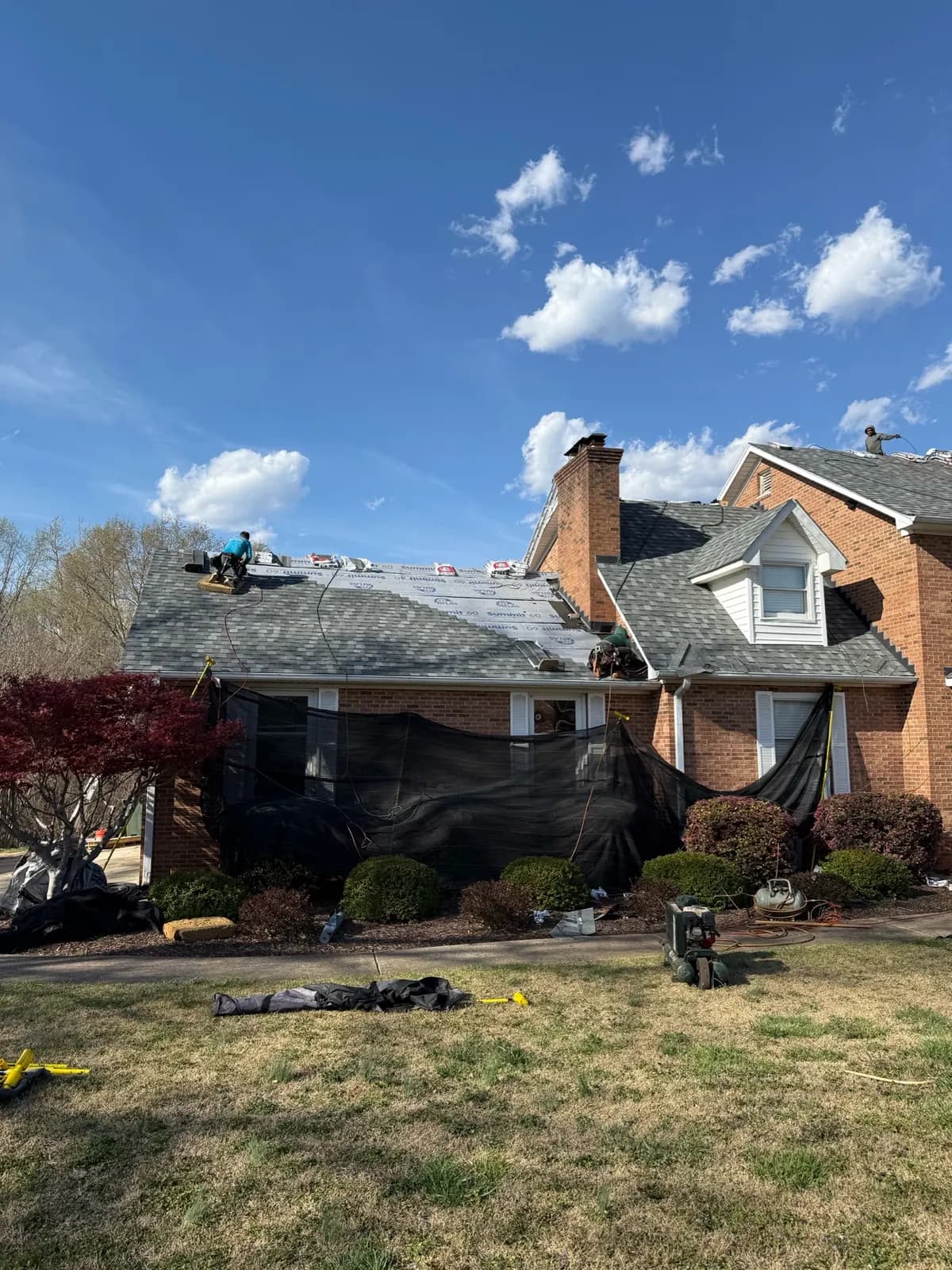
Parts of an asphalt shingle roofing system
The roof deck creates the base. Drip edge manages water at eaves and rakes. Underlayment adds a secondary layer beneath the shingles, while ice-and-water membrane gives extra protection at vulnerable locations. Starter shingles help seal the first course and resist wind where pressure reaches the roof boundary.
Field shingles shed most rain through overlapping courses. Step flashing, chimney metal, pipe boots, and valley details carry water through every interruption. Ridge caps finish hips and peaks. A ridge vent, when suitable, must work with lower intake so attic air has a planned route rather than a random opening.
Rhino uses ice-and-water protection around dormers, valleys, penetrations, and chimneys on replacement work. Bill also checks installation while the layers are open. Underlayment laps, flashing placement, and deck conditions are easier to judge before the final courses hide them.
Deck and edge
A sound base, drip edge, and starter courses establish support and wind resistance.
Water layers
Underlayment and targeted membrane protect beneath the finished shingle surface.
Roof details
Valleys, walls, chimneys, pipes, vents, and skylights need layered flashing.
Finished covering
Field shingles and ridge products are fastened and exposed according to the selected system.