Rhino Roofing & Restoration

Emergency Roof Repair in Taylors, SC

Emergency roof repair in Taylors, SC is about controlling damage without creating more risk. If water is moving into the house or wind has opened the roof, call Rhino during business hours and keep everyone away from the damaged area.

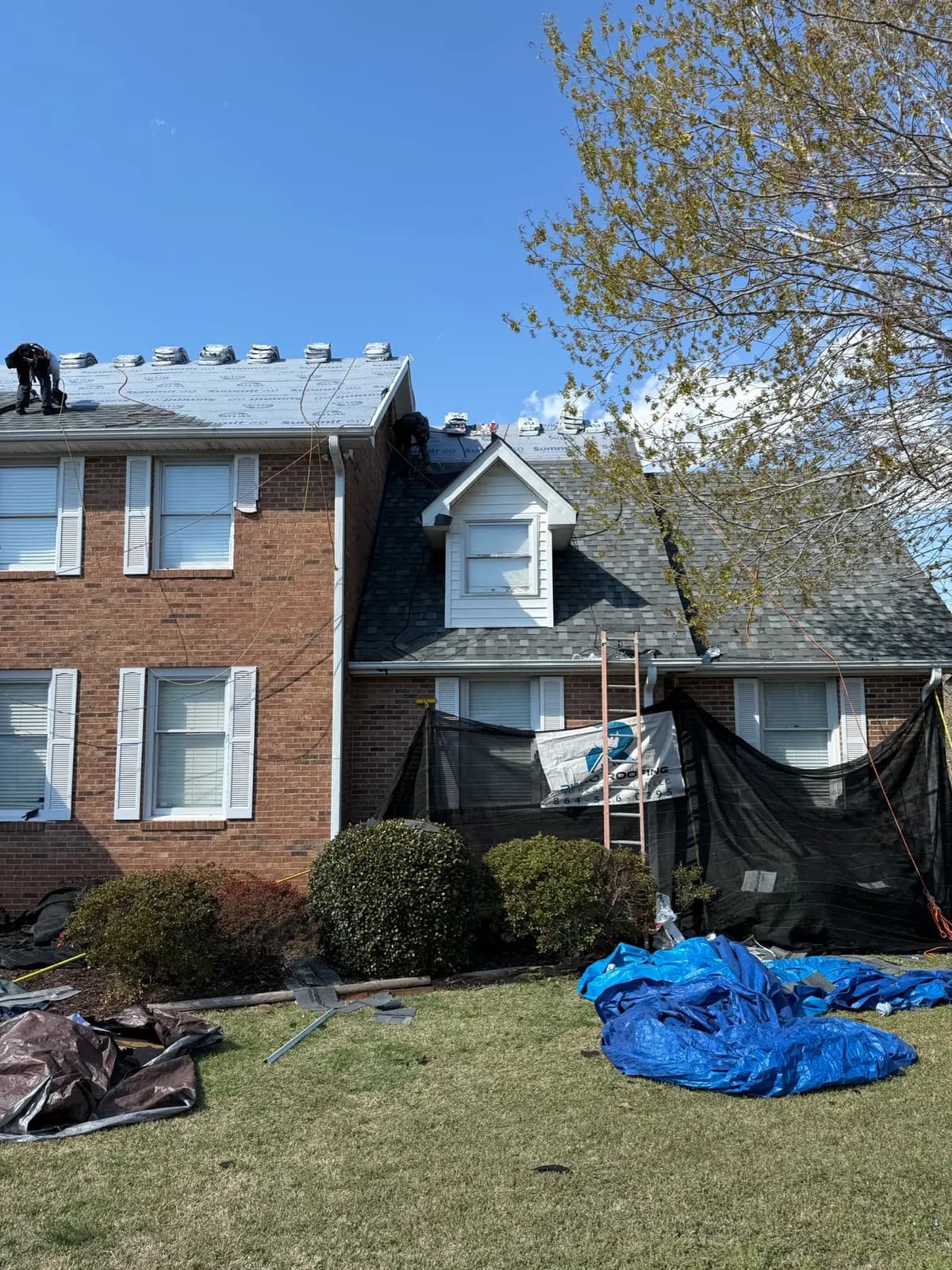
Residential roof project with protective tarps in place

What to do when the roof suddenly fails

A branch through the roof is obvious. Other urgent problems are quieter: water dripping through a light fixture, shingles peeling back in a storm, or a ceiling that begins to sag. Treat electricity and bulging drywall seriously. Move people and valuables away from the area, use a container only if it is safe to place one, and call the appropriate emergency utility service when electrical equipment is involved.

Do not climb onto a wet or wind-damaged roof. Steep surfaces become slick, loose material can move underfoot, and structural damage may not be visible from above. Photos taken safely from the ground or indoors can help explain the situation when you call, but no photo is worth standing beneath a failing ceiling or close to a downed line.

01Service guide

What counts as an urgent roof problem

An active opening that allows water into occupied space needs prompt attention. So does a fallen limb, loose metal, missing sections of roofing, or damage that exposes the deck. A small, old ceiling stain with no current moisture may still need an inspection, but it does not carry the same immediate risk as running water or unstable material.

Rhino’s office is open Monday through Friday from 8:00 AM to 5:00 PM. The company does not advertise a 24-hour emergency line, so homeowners facing a dangerous after-hours situation should protect people first and contact emergency services or an available mitigation provider when necessary. Rhino can then evaluate roofing work during business hours.

  • Active water

    Move belongings and people from the wet area, especially when water is near lights, outlets, or equipment.

  • Fallen tree or limb

    Stay out from beneath the impact area until structural safety is understood.

  • Loose roofing

    Keep people and vehicles away from material that could fall or blow from the building.

  • Interior bulging

    A sagging ceiling may be holding water and can release suddenly; do not stand below it.

02Service guide

Temporary stabilization versus permanent repair

A tarp or temporary covering may reduce water entry, but it is not the finished repair. Safe stabilization depends on weather, roof access, the size of the opening, and whether the deck or framing has been damaged. High wind, lightning, and wet surfaces may make immediate roof access unsafe even when the leak is active.

Once conditions allow a close inspection, Rhino identifies the damaged roofing and checks the surrounding area. Wind may affect more shingles than the missing pieces suggest. An impact may crack decking or disturb flashing beyond the visible hole. The permanent scope should address that full damage path.

03Service guide

Documenting storm damage without rushing into a claim

Photos of the roof, interior water, fallen material, and damaged belongings can help create a record. Note the date and approximate time of the event. Keep receipts for reasonable steps taken to limit further damage. Your insurance carrier can explain policy duties and claim procedures.

Rhino does not treat every storm call as a reason to file a claim. If the damage is minor, paying for a focused repair may make more sense than opening a claim near the deductible. When damage is substantial and storm-related, Rhino can provide photos, a written report, and meet with the adjuster to discuss roofing conditions.

04Service guide

Limit interior damage while waiting for safe roof access

When it is safe to stay in the room, move furniture, electronics, rugs, and keepsakes away from the wet area. Place a wide container beneath a steady drip and put towels around it for splash. Do not balance a bucket on furniture or climb into an attic where wet insulation, exposed wiring, low clearance, or damaged framing creates another hazard.

Water near a ceiling fan, recessed light, outlet, panel, or appliance needs extra caution. Leave the area and contact the power company, fire department, electrician, or other appropriate emergency service if electrical safety is uncertain. Do not touch a wet fixture or assume a wall switch has removed every source of power. Safety takes priority over tracing the leak.

A bulging drywall ceiling may hold more water than the visible drip suggests. Keep people and pets away from it because the material can fall without warning. Homeowners sometimes hear advice to puncture the bulge, but doing that beneath electrical wiring or unstable material can make the situation worse. Emergency roof repair starts with a safe building, not a rushed trip onto the roof.

05Service guide

Turning an emergency opening into a defined repair

Once rain and wind pass, the urgent symptom still needs a normal roofing diagnosis. The inspection should identify the entry point, the damaged roof layers, and the reach of water inside the assembly. A missing group of shingles may expose underlayment but leave the deck intact. A limb impact may break sheathing and framing below an opening that looks small from the ground.

Temporary material must be removed or integrated correctly before permanent work. Fasteners used for a tarp can create holes outside the original damage. Wet insulation may need to come out. Interior drying can be a separate task from roof repair, and structural or electrical work may require another qualified trade. Rhino keeps the roofing scope clear while helping the owner understand those boundaries.

If insurance is involved, emergency photographs and temporary-work invoices should be kept with the claim file. The carrier decides policy coverage, while Rhino documents roof conditions and prices the roofing work. Separating those roles helps the homeowner avoid promises that a contractor cannot make and gives the adjuster a direct account of what was stabilized and what still needs permanent repair.

Roof work may stop new rain from entering while the building still needs drying. Wet carpet, insulation, drywall, framing, cabinets, and stored items do not return to normal the moment a tarp or repair is installed. Note which rooms were affected and ask the appropriate restoration professional about drying when the water reached more than a small, easily managed surface. Keeping the roof repair and interior mitigation records together provides a timeline of the event without asking either contractor to guess about work outside their trade. Check the weather again before moving protected belongings back into place, since permanent exterior work may depend on a dry surface and safe wind conditions the following day.

How we approach it

From urgent call to lasting repair

The response changes with weather and safety, but the work should still move from control to diagnosis to a permanent scope.

  1. 01

    Make the area safe

    People stay clear of electrical hazards, unstable ceilings, fallen material, and the damaged roof surface.

  2. 02

    Inspect and stabilize

    When access is safe, the opening and surrounding roof are reviewed and temporary control is used where appropriate.

  3. 03

    Complete the permanent work

    Damaged layers are repaired or replaced after the full condition and any insurance involvement are understood.

Helpful answers

Emergency Roof Repair questions

Urgent roof situations call for clear safety boundaries. These answers separate immediate protection from the permanent roofing work that follows.

Does Rhino offer 24/7 emergency roof repair?

Rhino’s listed hours are Monday through Friday, 8:00 AM to 5:00 PM, and the company does not advertise a 24-hour emergency service. Call during business hours. For an immediate threat involving electricity, fire, structural collapse, or personal safety, contact the proper emergency service first.

Should I put a tarp on the roof myself?

Not if the roof is wet, steep, storm-damaged, or exposed to wind. Falls and unstable surfaces create serious risk. A temporary covering also has to be secured without causing additional holes or trapping water, so professional help is the safer choice.

Can an emergency patch stay in place permanently?

Temporary work is meant to limit damage until the roof can be opened and repaired correctly. Sun, wind, trapped moisture, and movement can defeat a patch over time. Ask what part of the work is temporary and what permanent repair still needs to be scheduled.

What information should I have when I call?

Share when the problem started, whether water is still entering, which rooms are affected, what you can see safely from the ground, and whether a tree, hail, or high wind was involved. Mention electrical or structural concerns immediately.

Ready when you are

Call when the roof problem cannot wait.

During business hours, tell Rhino what is happening and where the water or damage is showing so we can discuss the safest next step.